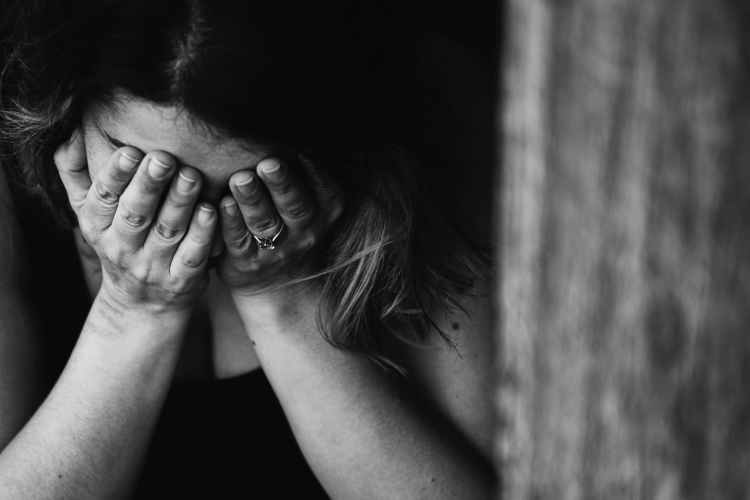
I vividly remember the day my cycle began. I was 11 years old, just weeks away from summer vacation and two months shy of my 12th birthday. I sat on the toilet, crying for hours, convinced I was dying. Surely, I thought, this must be the end.
Eventually, my aunt—who was staying with us at the time—knocked on the door, frustrated, asking if everything was okay. She may have called my mother eventually, but all I recall is staring at my blood-stained underwear in utter confusion, completely oblivious to what was happening to my body.
My mother took the underwear away, likely to wash it, and muttered something about how this was “normal.” But from my perspective, I felt nothing but shame. It was as if she had walked out the door shouting to the neighbors about my “condition.”
My aunt returned holding what looked like a giant diaper—the world’s biggest pad, or so it seemed to me. I refused to wear it at first, horrified at the idea of walking around with such a bulky reminder of my “sickness.”
“It happens every month,” she said casually.
“Every month?!” I cried. “I die every month?!”
The timing couldn’t have been worse. Summer vacation was just around the corner—a season I adored. Every year, we camped in Greece for months, my favorite part of childhood. And now? How was I supposed to swim while “dying”?
The shock of that experience must have sent my body into retreat because my cycle didn’t return for nearly a year. I got to enjoy one last summer as a carefree kid before stepping into what I then saw as a world of monthly dread.
The importance of Menarche
This first menstrual experience leaves an imprint—an unconscious blueprint for how a woman perceives her cycle and herself. It shapes her understanding of her body and her ability to honor her true nature. Unfortunately, in my case, it came as a complete surprise, unaccompanied by any preparation or awareness. My mother didn’t educate me because her mother hadn’t educated her. Perhaps I was the first among my friends to get it, so no peer conversations prepared me either. Not to mention the flawed education system. It was a societal silence—a taboo shrouding a fundamental aspect of female physiology. Here begs the question;
Why has society raised us to suppress human nature? Why must women hide their menstrual experience while men conceal their emotions? Why is vulnerability feared, seen as weakness instead of strength?
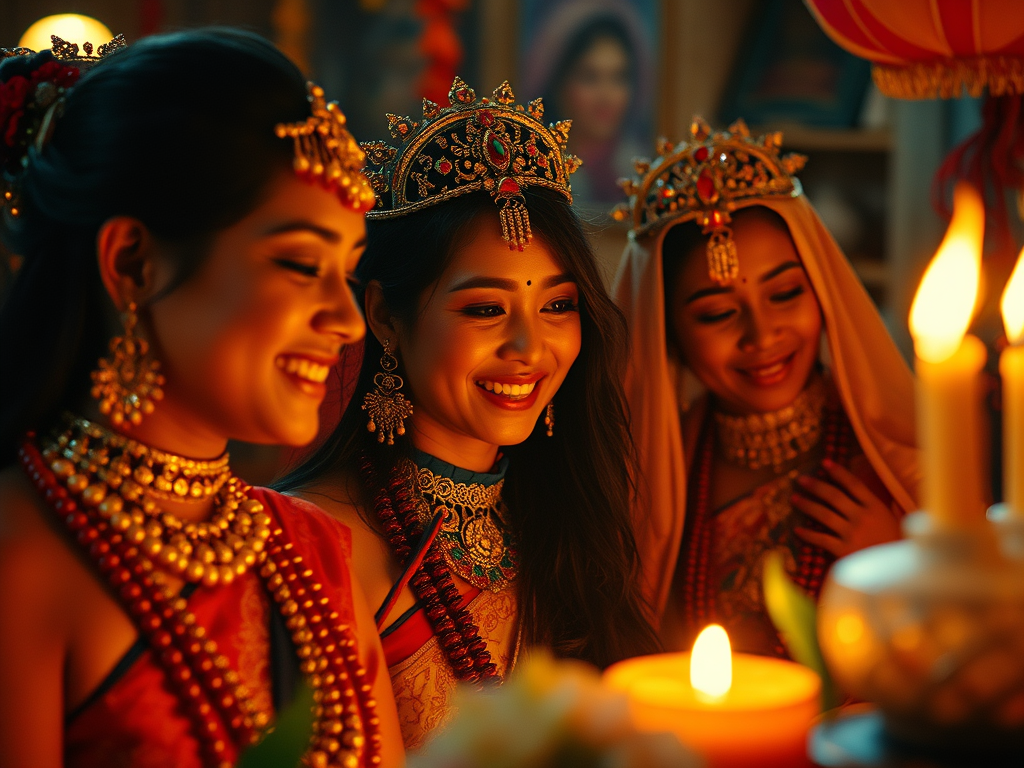
In many Eastern cultures, menarche is a sacred event, celebrated with joy and reverence. In India, for example, it’s marked with grand ceremonies, music, dancing, and gatherings. A girl is adorned in beautiful clothing, surrounded by loved ones, and honored as she steps into her womanhood. These celebrations recognize the immense creative power she now holds—the power to create life, to nurture, and to embody divine feminine energy.
But for so many of us in the West, menarche comes with silence, shame, and confusion. The stigma surrounding menstruation runs deep in our culture. It’s treated as something to hide, something to be embarrassed about. The first bleed often comes as a shock, and that sense of fear, shame, or unworthiness can carry through into adulthood.
What is it about our society that fears femininity?
I spent over 20 years living in that cycle of shame and dread. Every month on a Full Moon, like clockwork, my period came, and with it, the familiar dread. I ignored my body’s cries for rest, pushed through the pain, and treated my cycle as an inconvenience. I felt disconnected from my body, suppressing my emotions and intuition to function in a world that demanded productivity over presence. I am surely not the only one.
Throughout history, women have been conditioned to suppress their true nature in order to conform to societal norms. This struggle may trace back to a time when women’s intuitive powers—manifesting in their roles as healers and nurturers—aligned them closely with the wisdom of Mother Earth. Such connections were once feared, labeled as ‘sinful,’ and condemned as witchcraft, leading to persecution and exile. Could it be that the hushed whispers around menarche today stem from these ancestral memories? ‘Hush, child. Now that you are a woman, remain silent—lest you face the same fate.’
“Though her soul requires seeing, the culture around her requires sightlessness. Though her soul wishes to speak its truth, she is pressured to be silent.”
Women who run with wolves, Clarissa Pinkola Estes
Should we dare to question the true intention behind birth control?
Luckily, I dodged the “birth control saga.” As an ’80s kid, many of my peers turned to the pill for regulation, pregnancy prevention, or freedom from worry. I too felt forced to abide by “medical advice” in my early 20s, but my body reacted so strongly after a week, that I knew it wasn’t right for me, even though according to ads of reasons on going on the pill, I was the perfect candidate.
The concept of children scared me. I truly did not feel a call to step into the role of a mother to a helpless flubby sack of skin at the time. I did not want the responsibility of molding a life, as I barely managed my own. But still, I felt instinctively that the pill altered more than it promised.
The body never lies. The more I suppressed my cycle, the louder my body spoke—through cramps, mood swings, and debilitating PMS. Deep down, my intuition was always guiding me, whispering that there was another way to live.
If more women tuned into their innate wisdom instead of solely relying on conventional medical advice, perhaps there would be a greater awareness of how the pill and other forms of birth control, while marketed as solutions to menstrual problems, often mask the underlying issues and numb the symptoms rather than addressing them at their root.
Just to clarify, that the birth control movement of the 1960s undeniably marked a turning point in women’s liberation, granting countless women autonomy over their bodies and a voice in a rigidly patriarchal society. Yet, I can’t help but wonder—at what cost? While it offered freedom from the physical and societal constraints of constant childbearing, it also ushered in a new dynamic: the gradual loss of intuitive trust in the wisdom of our own bodies. Was this, in part, shaped by the masculine voice of the era—one that prioritized control, logic, and external solutions over the deeply feminine connection to inner knowing?
Did this shift subtly reinforce the narrative that our natural rhythms needed managing rather than honoring?
The purpose of cycling
In 2017, after years of battling anxiety, stress, relentless work demands, the loss of loved ones, and eventual burnout, my body finally reached its breaking point. Desperate for change, I left everything behind and found myself in the jungle of a Thai island. There, I immersed myself in an intensive yoga teacher training, but an unexpected fall from a high hammock left me with a bruised tailbone and possibly an undiagnosed hairline fracture. And just when I thought I had nothing left to lose, my body dealt me one final blow—I lost my menstrual cycle.
Unable to sit, bend forward, or even walk without pain, I turned to self-guided physiotherapy, spending hours floating in a pool—the only place where I felt any relief from the excruciating nerve tension. By the second month, I was finally able to sit again, but still, my cycle didn’t return. I traveled to Cambodia, hoping for change. Nothing. Back in Thailand, still no sign of my bleed.
Seeing as how my cycle felt like a burden for most of my life, I ought to have been celebrating. Finally free from the dread and shame I have been feeling for years. On the contrary… I did not feel free.
For the first time in my 33 years of life, I began to deeply question my relationship with my body, my choices, and my feelings around procreation. The absence of my cycle did not feel like a burden has been lifted, rather felt like a choice had been stripped away from me. Not that I suddenly wanted a child, but that I no longer had the choice in the matter, that shook me to my core.
I realized how much I had taken my body for granted—this innate, sacred power of creation that I had ignored, dismissed, and even resented. Instead of honoring my womb and its wisdom, I had spent years shaming and suppressing it. Losing my cycle felt like losing a part of myself, and in that absence, I came to understand just how deeply my first bleed had shaped my perception of womanhood.
Rewriting the story of Menarche
After 5 months of grief, of letting go of the shame and dread, that didn’t just go away with my bleed, I arrived in Nepal, feeling lost—confused, directionless, and questioning everything about my life. What was I doing? Why am I traveling? What is my purpose now?
On my second day there, I woke up to an intense pain that brought me to my knees. And then, like a miracle, the beautiful red stream returned. It flowed seamlessly, as if it had never left.
Overcome with joy, I chose to treat myself to a more comfortable place to stay—a deliberate shift from the backpacker-style travel I had known until then. I wanted a space where I could fully honor this moment and reconnect with my body. That day, I fasted, not out of necessity, but as an act of gratitude and reflection. My cycle had returned, and with it a renewed connection to my power—the choice to create, to nurture, and to align with my deepest self.
This time, it wasn’t just about the potential for physical procreation—bringing life into the world—but about creation in all its forms. It was about honoring the power to manifest and express the fullness of my inner self into the outer world. It was about coming home to myself fully and completely, in celebration to all aspects that make me a woman.
A few days later I met some new female friends at a cafe, where I felt called to share this exciting news about my cycle’s return… and she shared with me a concept I remember feeling slightly disturbed by at the time… Free Bleed.
Free bleeding is the practice of becoming so attuned to your menstrual cycle that you can sense the need to release blood, much like the urge to urinate or empty your bowels. Unlike tampons or polyester-lined pads, which may trap blood in potentially harmful ways, free bleeding encourages you to honor your body’s natural timing and flow.
Since then, I have mastered the art of free bleeding and discovered how profoundly it connects you to the raw, unfiltered essence of yourself. I came to understand the significance of each stage of the menstrual cycle and how it shapes our emotional, mental, and physical capacities. This journey deepened my knowledge of female physiology and revealed the incredible wisdom behind our inner seasons and cyclical nature. By integrating Ayurveda into my daily life, I learned to honor my womanhood and became acutely aware of how deeply misinformed and suppressed women have been in our society—including myself.
Bleeding together
Honoring your bleed is not only essential for your well-being, but it is also rooted in a long-standing tradition of women bleeding together. This practice gained renewed attention in the Western world in the 1990s with Anita Diamant’s novel The Red Tent, which portrayed women gathering in a designated space to rest, free from obligations, while honoring the body’s natural cleansing process. The book inspired a movement of women reclaiming the sacredness of their cycles. However, with the rise of the feminist movement, this tradition was often reinterpreted through a modern lens, seen not as an act of reverence and empowerment but as one of punishment or isolation.
Sinu Joseph, an Ayurvedic Scholar specializing in womens’s health further explains in her deeply researched book Rtu Vidiya (seasonal wisdom) that, in ancient India, such spaces were not “bleeding huts” meant to exile women, but sanctuaries of rest, healing, and rejuvenation. Men built these spaces with sacred herbs and healing plants as an offering to honor and worship their women, relieving them of daily chores and responsibilities so they could fully replenish. In this act of reverence, women were seen as Goddesses, deserving of care and celebration.
Today, modern women often push through their cycles, competing in a masculine-driven world while neglecting their essence. This disconnect has led to widespread hormonal imbalances and disorders. We are not meant to live as men. Equality isn’t about doing what men do but about respecting the unique power and wisdom of femininity.
Reclaiming Menarche
The truth is, your menarche sets the tone for how you experience your cycle, your femininity, and your relationship with your body. I witnessed this first hand with my own cycling nature.
When a girl is celebrated and educated about her first bleed, she grows up seeing her body as powerful, not shameful. When she understands the wisdom of her cycle, she learns to honor the natural rhythms of her body instead of fighting against them.
This is why I believe we need to reclaim menarche—not just for ourselves, but for future generations of girls. They deserve to enter this sacred rite of passage with awareness, confidence, and celebration.
Because on the other end of Menarche is Menopause, and so many women today live in resistance to this natural stage of life, again, influenced by this same society that has had us deprived of the knowledge of female physiology, and live in shame during our bleed.
No more sliding tampons and pads down your sleeve as you rush across a public space toward the bathroom.
No more pushing through and forcing yourself to work, be productive and exhaust your energy while the body begs for rest.
No more stuffing your face with pints of ice cream, pizza, and pasta as punishment for not having the energy to go out and be social.
No more feeling guilty for what you are, who you are naturally!
In 2023, Spain passed a law granting women a paid menstrual leave from the workplace, becoming the first European country recognizing the sexual and reproductive rights of women in the workplace.
Perhaps this is a start of the feminine revolution.
Perhaps this is the beginning of women coming together and reclaiming their sacred place on this Earth.
Honoring your cycle
My experience has shaped a purpose within me to share the wisdom I gained around being a Cyclical Woman. Today, I teach women how to reconnect with their bodies, honor their cyclical nature, and heal the wounds created by years—sometimes decades—of societal conditioning. Much of this work begins with revisiting their menarche, re-writing the story, and creating a new, empowered relationship with their cycle.
Because the cycle isn’t just about menstruation. It’s about creation—physical, emotional, and spiritual. It’s about understanding the natural seasons of our bodies and aligning our lives with those rhythms. It’s about reclaiming the wisdom of the feminine and learning to trust the intuition that has always been within us.
This journey inspired me to create The Feminine Blueprint, a course designed to help women reconnect with their cyclical nature, balance their hormones, and heal the generational patterns of shame and suppression. It’s about unlearning societal expectations and reclaiming the fullness of your authentic self.
This course gently whispers and reminds you to attune to your intuition, to master and reclaim your womb wisdom. To re-align with, and balance your sex and stress hormones. To invite fertile grounds for creation (whether physical or metaphorical) To be INFORMED about the sequence of events that follow as we enter our 40’s — preparing us for a new stage in life.
It’s time to honor yourself fully and recognize that;
“YOU ARE ENOUGH”
You are WORTHY;
You are a GODDESS of CREATION! and are ALLOWED TO REST


 UnearthVeda